The Social Cost of Curiosity
Inspiration
•
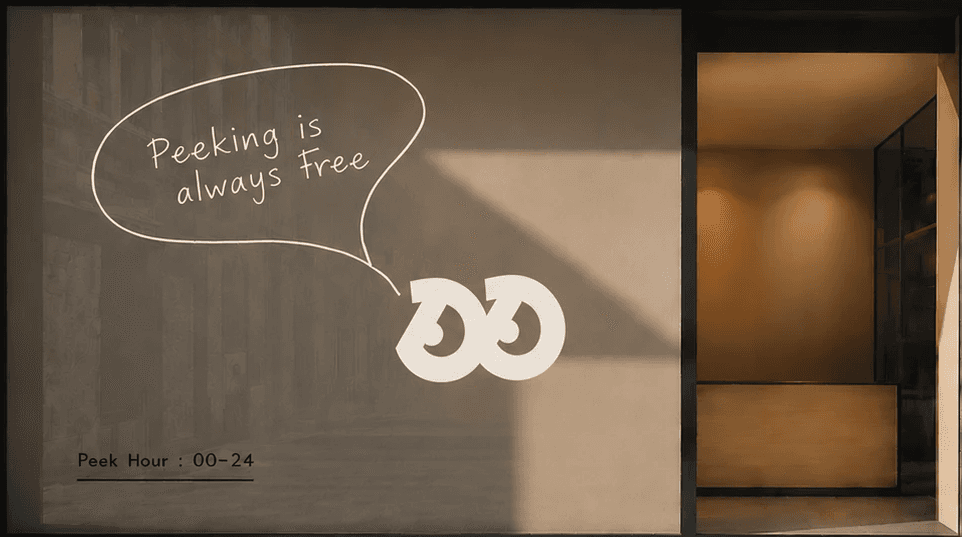
Standing outside a shop window costs nothing.
Walking inside does.
The moment you cross the threshold, you're visible. A salesperson notices you. They might approach. You might have to explain yourself what you're looking for, your size, your budget. If you try something on and leave without buying, there's a small but real discomfort in that. A silent transaction that didn't complete. So sometimes, you don't go in. You stand at the window a little longer instead.
This isn't indecisiveness. It's a rational response to social cost.
Curiosity has always had a price
The shop window is one of the oldest interfaces between interest and action. It exists precisely because wanting to look and wanting to enter are different states. Retailers understood this. They built an entire layer of experience lighting, display, composition for the person who isn't ready to commit yet.
Most digital platforms never built that layer.
Online, the gap between noticing something and doing something about it collapsed. Every interaction that was once private became a public action. Following someone creates a visible connection. Liking something leaves a record. Even saving a post is tracked and, in many platforms, surfaced to others.
There is no window to stand at. You're either inside or you're not.
This isn't a fashion problem. It's a human one.
Think about how many times you've held back from a low-stakes action because of its social weight.
You wanted to follow an account, but hesitated because the person might see it, or mutual connections might notice, or it would signal something you weren't sure you wanted to signal yet. So you didn't.
You came across a creator whose work you found interesting, but you weren't ready to become a visible part of their audience. You didn't want to enter their orbit. You just wanted to watch for a while.
You found someone's profile from years ago an old colleague, an ex, a stranger you briefly crossed paths with and you were curious. You looked. But you didn't follow. Because following announces.
These aren't niche behaviors. They happen constantly, across every type of platform, to almost everyone who uses the internet.
People want to observe before they participate. They want to stay close to something before they commit to it. They want to understand what they're looking at before they attach their name to it.
This is not hesitation. It's how interest actually develops.
What platforms built instead
Social platforms were designed around expression sharing, signaling, connecting. Interaction mechanics like likes, follows, and reposts are all built for the moment after you've decided something.
They have no mechanic for the moment before.
So when someone is in that earlier state curious, watching, not yet decided the platform gives them two options: take a public action, or do nothing and leave. Most of the time, they leave.
What they would have done, if a quieter option existed, stays invisible. The platform never learns it. The creator never knows. The signal is lost.
Why the word "Peek" matters
A peek is not a view.
A view is neutral. A peek is specific: it's quick, discreet, almost secret. You peek around a corner. You peek through a gap. The word itself implies that you're looking without announcing yourself present, but not visible.
That emotional precision is why the word works here. It doesn't describe a feature. It describes a posture. The person who peeks is genuinely interested, but they're not ready to be seen being interested. They're in the window, not the store.
That state deserves its own name.
The idea underneath
Every social system has a participation threshold the minimum level of commitment required to engage. Right now, that threshold is too high for a large category of real human behavior.
There are people who would stay connected to something if staying connected didn't cost them their privacy.
Peek is built for that.
Not for the moment you've decided. For the moment before.
PeekTag is a fashion discovery platform built around private curiosity.