Most Things Were Designed to Be Seen
Inspiration
•

There's a jacket in a shop window. It presents itself its color, its cut, its price on a small tag in the corner.
But it cannot participate in your decision.
It cannot tell you whether it runs small. It cannot show you how it looks in a different color. It cannot compare itself to something similar two streets away, or explain why someone who bought it last month is still wearing it every week. It cannot ask what you're trying to figure out.
It can only stand there. Looking good. Waiting.
This is not a limitation of the jacket. It is a limitation of how we built the world.
What objects learned, and what they didn't
The printing press gave objects the ability to display. For the first time, a thing could carry language a label, a description, a price, an instruction. Objects became legible.
The web gave objects the ability to link. A page could point to another page. A product could connect to a catalog. A place could connect to a map. Objects became navigable.
Neither step made objects interactive.
Everything built in between signs, labels, pages, listings, profiles, feeds shares the same fundamental design. They broadcast. A person receives what they show, and that is the end of the exchange. The object has no awareness of who is looking, what they need, or what would actually help them decide.
For most of history, that was fine. Broadcasting was the only option.
It is no longer the only option. But almost everything around us is still built as if it were.
The QR code problem
When QR codes became widespread, many people assumed the gap between physical objects and digital interaction had been solved.
It hadn't. It had been bridged, which is different.
A QR code is a navigation tool. It moves you from one place to another from a physical surface to a digital destination. That destination is still a webpage. The webpage still doesn't know who you are, why you scanned, how long you stood outside before deciding to look, or what would actually help you in this moment. It presents itself, exactly like the jacket did.
Navigation gets you to a place. Participation meets you where you are.
Scanning a QR code on a restaurant table does not make the menu interactive. It makes the menu accessible. Those are not the same thing. An accessible menu shows you the dishes. An interactive menu can understand that you're vegetarian, that you've never been here before, that you're trying to decide between two things, and that you have twenty minutes.
The gap between accessible and interactive is exactly the gap most things have never crossed.
Static by default
Look at the things around you with this question in mind: which of these can participate?
A product on a shelf can display its name and price. It cannot guide you toward or away from itself based on what you actually need. A poster can announce an event. It cannot help you decide whether to attend. A shop can present its window. It cannot engage the person standing in front of it, curious but not yet ready to walk in. A place on a map can show you where it is. It cannot tell you what it is like to be there, or whether it is right for you, or what other people in your situation thought of it.
A menu cannot adapt. A location cannot explain itself. A product cannot compare itself. An event cannot help you decide.
Not because the capability is technically impossible. Because the design assumption, carried forward from print and broadcast, is that objects present and people search. One direction. Always.
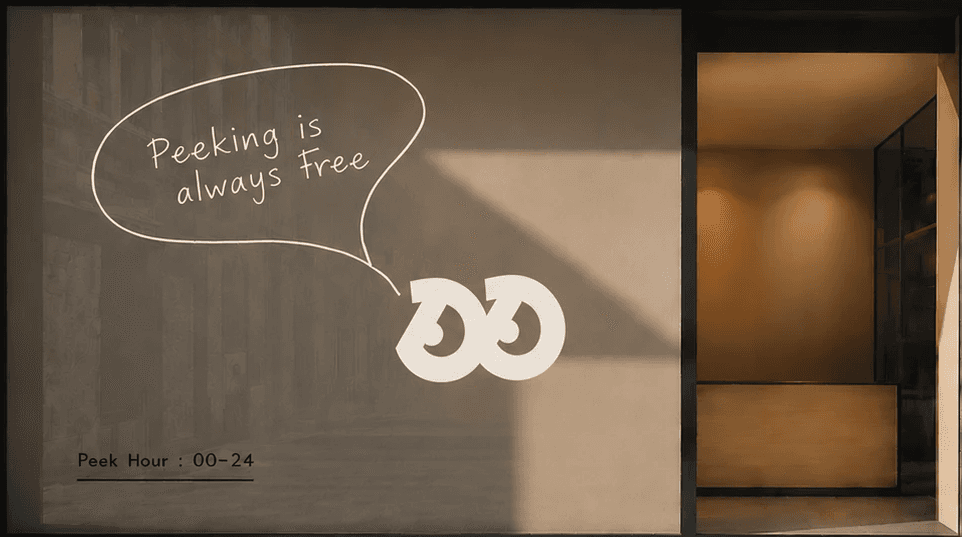
The world is not short on things to look at. It is short on things that look back.
What participation changes
When something can participate, the nature of the interaction shifts entirely.
A restaurant where the menu understands context is not just a restaurant with a better website. It is a place that can engage a visitor before, during, and after — adapting to the question being asked rather than displaying the same content to everyone.
A product that can guide a decision is not just a product with more reviews. It is an object that behaves differently depending on who is holding it and what they are trying to figure out.
A location that can explain itself is not just a pin on a map. It becomes an experience you can enter before you physically arrive one that can help you understand whether to go at all.
The shift is not incremental. A static thing and a participatory thing are not different versions of the same object. They occupy different relationships with the people around them.
The design limitation we stopped noticing
Most things around us can be discovered.
Very few can participate.
This has been true for so long, and has been so consistent across categories products, places, events, services, objects, experiences that it stopped feeling like a limitation and started feeling like the nature of things.
But it is not the nature of things. It is a design assumption. One inherited from a period when objects had no other option than to stay silent.
That period is ending. What comes after it is not a better version of broadcast.
It is a world where things can respond.
PeekTag is building that world.